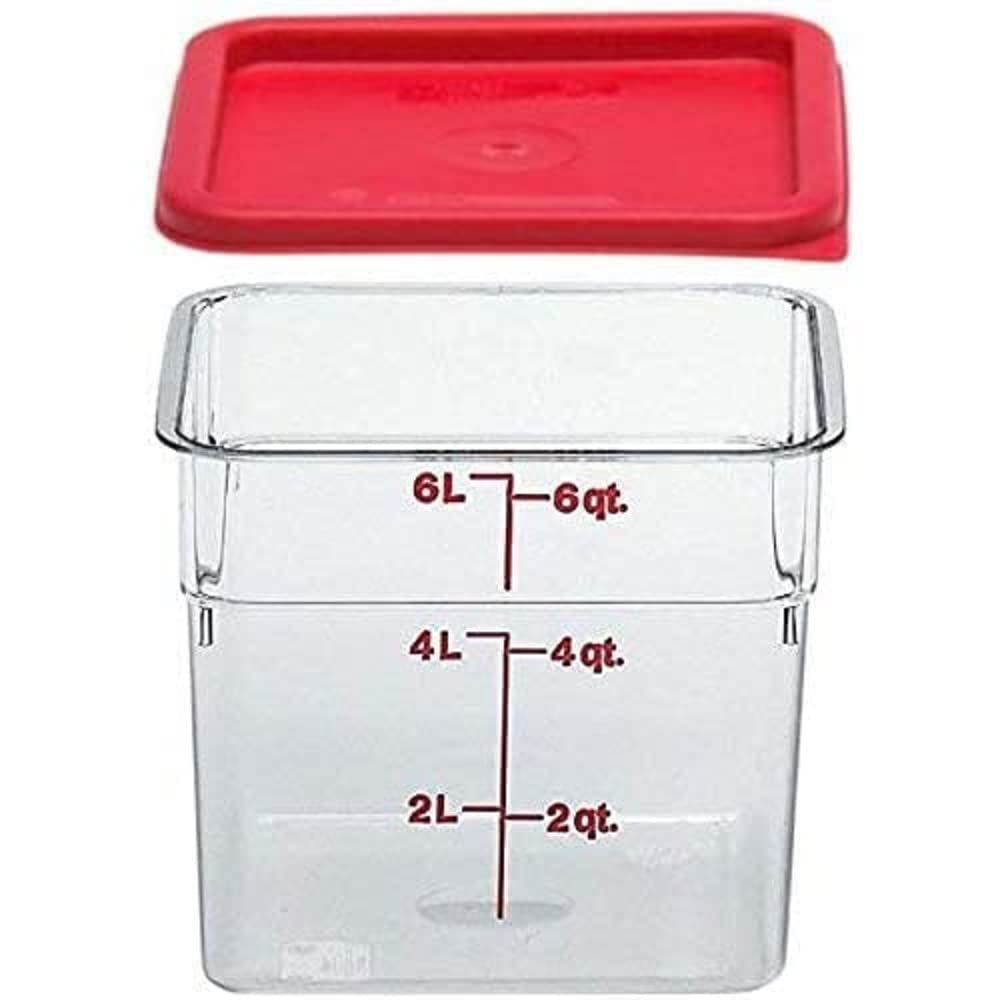
Maria had been operating her empanada truck for fourteen months before her commissary renewed its lease — and the new landlord required a fresh health department walkthrough of every tenant’s storage setup. She failed on one line item: her prep containers weren’t NSF-marked. Not the food inside them. The containers themselves. She had to replace roughly $340 worth of plastic bins before she could regain access, and she lost two prep days in the process.
If you’re newer to mobile food service, here’s the context: NSF certification (issued by NSF International, an independent public-health organization) is a third-party mark confirming that a piece of food-contact equipment meets the design, material, and cleanability standards defined in the NSF/ANSI 2 Food Equipment Standard. “Food-contact” means anything a raw or ready-to-eat ingredient touches — including the storage containers you use for cold-holding, transport, and mise en place (the French kitchen term for “everything prepped and in its place before service”). This article walks through which container formats matter most in a mobile kitchen, how to navigate polycarbonate versus alternatives, and exactly what the commissary inspector is looking for when they open your reach-in.
Why NSF Marking Is Non-Negotiable for Mobile Operators
Stationary restaurants get inspected at one address. Mobile kitchens get inspected at the commissary (the licensed commercial kitchen you’re required to use for prep and storage in most states), at permit renewal, and sometimes at the event site itself. That multiplied inspection exposure is the reason a detail that home cooks ignore entirely — the certification mark on a plastic bin — becomes a real capital risk for you.
Per the FDA Food Code 2022, all food-contact surfaces must be constructed of safe materials that are smooth, durable, and nonabsorbent. NSF/ANSI 2 is the standard that operationalizes those adjectives into measurable criteria: no crevices that trap bacteria, no plasticizers that leach into food at operating temperatures, no surface degradation under commercial sanitizers. A container without the NSF mark isn’t automatically unsafe — but it hasn’t been verified, and inspectors in most jurisdictions won’t accept unverified equipment on food-contact surfaces.
Food Truck Empire’s commissary requirement guide notes that container compliance failures are among the top five reasons mobile operators receive conditional permits rather than full approvals — and conditional permits typically require a re-inspection fee and a fixed correction window, both of which hit cash flow.
The practical implication: if a container doesn’t carry the NSF mark (usually molded into the base or printed on the lid), assume it won’t pass. Buy for the mark first, then optimize for price and format.
Polycarbonate vs. Polypropylene vs. Camwear: The Real Material Tradeoff
Walk into any restaurant supply house and you’ll see food storage containers in two dominant plastics: polycarbonate (PC) and polypropylene (PP), plus brand-specific variants like Cambro’s Camwear (which is a polycarbonate-based formulation). Here’s how they compare for mobile-kitchen realities.
Polycarbonate is rigid, optically clear, and rated for a wide temperature range — typically –40°F to 210°F per manufacturer spec sheets. That clarity makes it easy to ID contents at a glance during a fast-moving service, which operators in aggregated reviews consistently cite as the deciding factor for front-of-cooler storage. The tradeoff: polycarbonate is heavier, costs more per unit, and older formulations raised BPA concerns (bisphenol A, a chemical compound). Most major NSF-certified polycarbonate lines sold today are marketed as BPA-free, but confirm on the spec sheet before purchasing if that matters to your permits or your customers.
Polypropylene is lighter, less expensive, and naturally BPA-free. It’s opaque or translucent rather than clear, which makes visual ID harder. It handles freezer temps well but is less impact-resistant than polycarbonate — operators in long-run reviews note that PP lids crack more readily when dropped on a metal floor, which is a real-world hazard in a truck that’s moving. PP is the stronger choice for dry storage and bulk ingredient bins where you don’t need to see through the container.
The cost reality in 2026: NSF-certified polycarbonate containers run roughly $8–$22 each depending on size; polypropylene runs $4–$14. For a fully stocked mobile kitchen, a mixed strategy — PC for cold-line visibility, PP for dry bulk — is both the most economical and the most practical approach.
By the Numbers
| Material | Approx. Cost per 6-qt Container | Temp Range (Mfr. Spec) | Clarity | BPA-Free Standard |
|---|---|---|---|---|
| Polycarbonate | $14–$22 | –40°F to 210°F | Clear | Confirm per SKU |
| Polypropylene | $6–$12 | –20°F to 250°F | Translucent/opaque | Yes |
| Camwear (PC-based) | $16–$24 | –40°F to 210°F | Clear | BPA-free line available |
Pricing based on WebstaurantStore’s published food storage container buying guide and current distributor list prices as of Q1 2026.
Pan Sizes That Actually Work in a Mobile Layout
Standard food storage containers follow the same sizing system as hotel pans (the rectangular stainless or plastic pans used in steam tables and reach-ins). Understanding this system is what lets you stack efficiently, maximize your reach-in, and standardize lids across your whole container inventory.
The base unit is a full pan (roughly 20¾” × 12¾”). Everything else is a fraction of that footprint:
- Half pan (12¾” × 10⅜”) — the workhorse size for most mobile cold-holding; fits two side-by-side in a standard prep rail
- Third pan (12¾” × 6⅞”) — ideal for condiment and topping stations
- Sixth pan (6⅞” × 6¼”) — small-batch sauces, cut proteins, allergen-separated items
- Ninth pan (6¼” × 4¼”) — garnishes, portioned butter, items where a sixth would leave dead airspace
Depth matters as much as footprint. The standard depths are 2”, 4”, and 6”. For mobile cold-holding under NSF 2, the practical rule from commissary inspectors is: don’t fill above the container’s fill line or within ½” of the rim, because overfilling creates a lid-seal failure that breaks the cold chain. A 4” deep half pan is the most versatile single size for most truck operators — deep enough for a full day’s proteins, shallow enough to cool quickly in a reach-in.
The sizing standardization also matters for commissary compliance in a specific way: commissary operators who share storage space often require that tenant containers fit a common shelving system. If your containers match the hotel pan footprint, you’ll almost never have a conflict. Off-format bins — the kind sold in bulk-storage or restaurant-supply discount sections without NSF marks — are often fractionally oversized or undersized and create exactly the kind of stacking chaos that commissary managers flag.
Restaurant Business Online has noted in its equipment compliance coverage that standardized pan systems reduce cross-contamination incidents by making labeling and dating protocols easier to enforce — an argument worth making to your commissary manager if you’re negotiating for dedicated shelf space.
What the Commissary Inspector Actually Checks
Understanding the inspector’s perspective is what separates operators who pass the first time from those who get conditional approvals. Based on the FDA Food Code 2022 requirements and NSF/ANSI 2 criteria, here’s what they’re looking at when they open your reach-in:
1. The NSF mark is present and legible. It needs to be on the container itself, not just the box it came in. If the mark has worn off (common on older polycarbonate that’s been through a commercial dishwasher hundreds of times), that container is effectively non-compliant from an inspector’s standpoint — replace it.
2. No cracks, chips, or surface scoring. NSF/ANSI 2 requires food-contact surfaces to be free of pits and crevices. A cracked container that you’re still using because “it still holds food fine” is a violation. Operators in long-run commissary relationships note that having a consistent container audit practice — rotating out visibly worn units quarterly — prevents this from ever becoming an inspector conversation.
3. Lids fit and seal. Loose-fitting lids on cold-held proteins aren’t just a cross-contamination risk; they indicate a mismatch between container and lid that suggests sourcing from different product lines. Buy lids and containers from the same manufacturer’s system.
4. Date labels are present and readable. This isn’t a container spec per se, but container choice affects labeling compliance. Smooth-walled, flat-sided containers accept tape labels without peeling. Containers with ribbing or texture — common in lower-cost lines — cause labels to fail adhesion after one wipe-down. QSR Magazine’s mobile kitchen compliance coverage from 2025 specifically flagged labeling failures as an increasing area of inspection focus as jurisdictions update their mobile kitchen codes.
5. Color-coding is consistent. Many inspectors now expect operators to follow an allergen color-coding protocol (red for proteins containing common allergens, green for produce, etc.). NSF-certified color-coded container lines exist specifically for this; using them signals operational sophistication and shortens the inspection conversation.
The Decision Rule: If X, Then Y
You’ve read the tradeoffs. Here’s how to convert that into a purchasing decision:
If you’re stocking a new build or restocking after a commissary change: Start with half-pan and sixth-pan polycarbonate containers in a single brand family (Cambro, Rubbermaid Commercial, or Carlisle are the three names operators in aggregated reviews consistently land on for long-run reliability). Budget $400–$600 for a complete cold-line set-up for a single-unit truck. Add polypropylene in bulk sizes (12-qt and 22-qt) for dry storage.
If you’re operating a multi-unit fleet or commissary-shared setup: Standardize on one pan system across all units. The per-unit cost savings from mixed sourcing disappear fast when a driver shows up with the wrong lid for a container and you’re holding proteins in an open pan during transit. NSF-certified polycarbonate in a single manufacturer’s ecosystem is worth the premium at fleet scale.
If you’re preparing for a commissary walkthrough in the next 30 days: Pull every container, flip it over, and confirm the NSF mark. Replace anything cracked, anything without a mark, and anything with a lid that doesn’t seal cleanly. That’s a half-day of work and probably $150–$300 in replacements that buys you a clean inspection and avoids the conditional-permit re-inspection cycle.
The containers are not the interesting part of running a mobile kitchen. But they’re the part that can pause everything else. Get the marks, match the lids, and standardize the system — then you can stop thinking about them.