Marcus runs a four-item burger concept out of a 16-foot trailer in Austin. Last summer he hired a second person for weekend rushes — not because the orders got more complicated, but because he kept losing seconds hunting for the squeeze bottle that migrated behind the bun rack, or calling out ticket modifications that his cook couldn’t hear over the flat top. The food was fine. The system was costing him four minutes per hour he didn’t know he was losing.
“Smallwares” is the industry term for the small, non-powered tools that live in your kitchen: squeeze bottles, prep containers, tongs, spatulas, ticket holders, labeling tape, portion scoops, and the dozens of other objects your hands touch hundreds of times per service. “Station organization” is simply how those tools are arranged so the right item is always in reach without thinking. Neither topic sounds like a capital decision — but in a space where your entire production kitchen might be 60 square feet, how you organize these details determines whether a two-person crew can run 80 covers or whether 60 covers breaks the line. This article will show you where smallwares choices actually slow operators down, what the decision logic looks like at each price point, and how to audit your own setup before your next busy weekend.
Why Smallwares Feel Like a Small Deal (and Aren’t)
The math is deceptively simple. QSR Magazine’s speed-of-service benchmarks for limited-service concepts put average ticket times for well-organized compact kitchens at 90–120 seconds per order during peak service. Add four seconds of searching or repositioning per ticket — a number operators at Food Truck Empire forums consistently describe as conservative — and you’re looking at roughly 3–4 minutes of dead time per 50-ticket service. That’s a table-stakes inefficiency that a ticket holder and a piece of label tape can fix.
The deeper issue is that food trucks have no back-of-house buffer. In a brick-and-mortar restaurant, disorganization in the prep station doesn’t immediately surface to the guest. In a truck, there’s one line. The station is the guest experience.
By the numbers:
- Average food truck interior workspace: 55–80 sq ft (Equipment Fabricators Association, 2024 estimates)
- Smallwares replacement budget for a single-concept truck: $150–$400/year at moderate volume
- Time cost of poor station organization at 50 tickets/service: estimated 3–5 minutes of recoverable dead time (Food Truck Empire operator reports)
- NSF-certified prep containers vs. uncertified alternatives: required for commissary compliance in most states with active health code enforcement
The Ticket Holder Problem Nobody Talks About
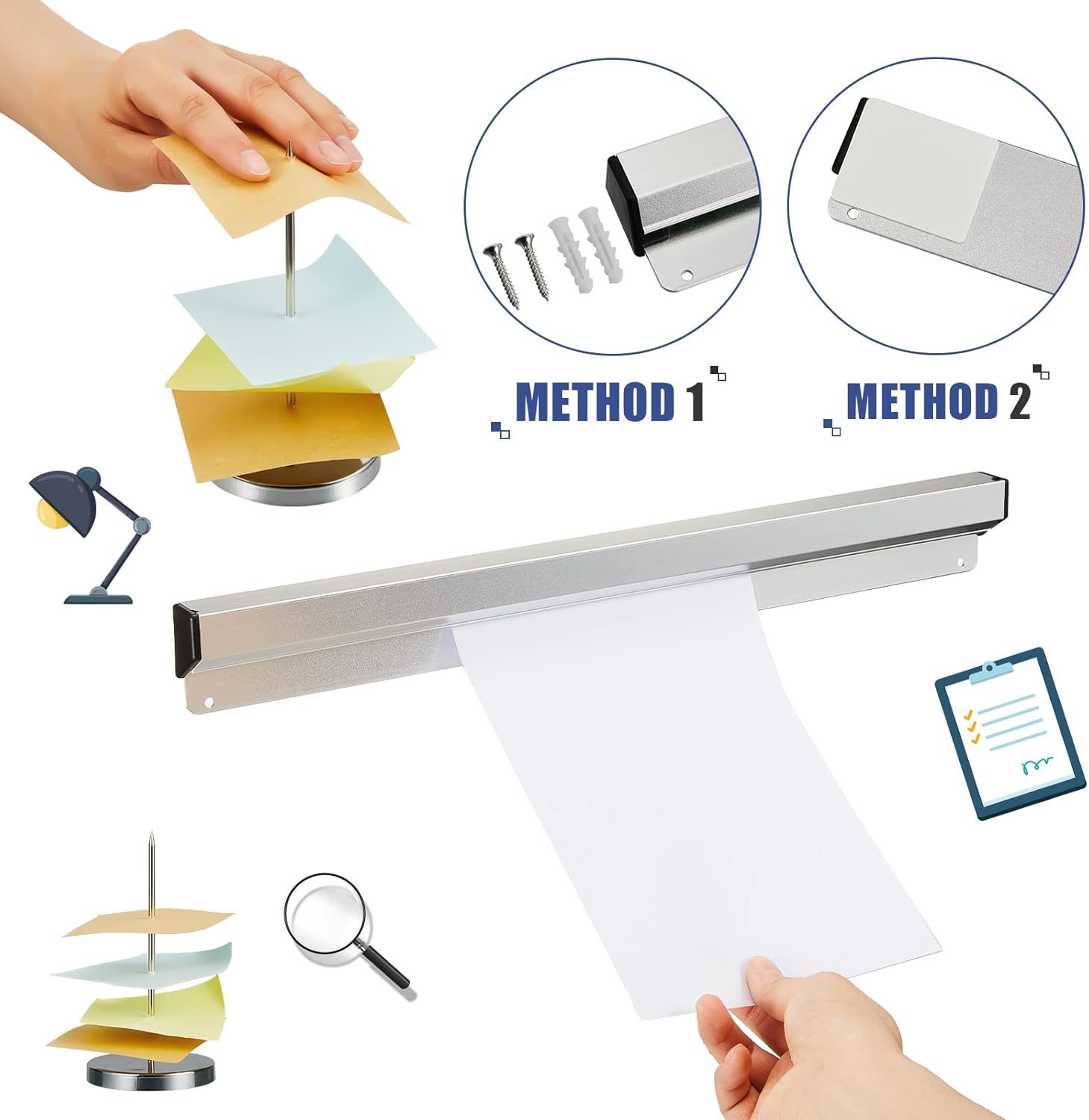
A ticket holder — the physical rail, clip, or slot system that holds your printed or handwritten order tickets at eye level — sounds like a $12 afterthought. It isn’t.
In a mobile kitchen, the ticket holder has to solve three problems at once that a stationary kitchen doesn’t face: vibration during transport (clips loosen, tickets fall), condensation and grease exposure (paper deteriorates fast near a flat top), and limited vertical real estate (most trucks have 18–24 inches of usable wall space above the cooking line before you hit the exhaust hood).
Operators who run high-volume service consistently gravitate toward one of two solutions:
Magnetic rail systems mounted to the stainless steel hood surround or the wall panel above the line. These use strong neodymium magnets to hold a horizontal rail, which means no screws into your trailer’s wall sheathing (preserving your fabricator’s warranty on sealed surfaces) and repositioning flexibility as your concept evolves. Restaurant Business Online notes that compact magnetic ticket systems have become a standard specification request in food truck builds at the $100,000+ tier precisely because they protect wall integrity. Brands like Vollrath and American Metalcraft produce NSF-listed rail systems in 12- and 18-inch lengths that operators report hold well even on trailers traveling highway speeds.
Laminated board and dry-erase systems are the lower-cost alternative — a $20–$40 solution that works well for operators running four or fewer menu items with minimal customization. The tradeoff is that dry-erase doesn’t hold up well during service with gloved hands and frequent ticket turnover; operators in longer-run reviews note marker ghosting and readability issues after 90-minute rushes.
The decision rule here is simple: if you’re running more than six active ticket slots during peak service or your concept has significant customization (build-your-own, dietary accommodations), invest in a mounted rail system. If you’re running a tight, fixed menu at lower volume, a dry-erase board works until you outgrow it.
Container and Label Systems: The Compliance and Efficiency Overlap
Prep containers — the polycarbonate or polyethylene bins that hold your mise en place (your prepped, ready-to-use ingredients) during service — sit at the intersection of regulatory compliance and operational speed.
NSF International’s food equipment standard (NSF/ANSI 2) requires that food-contact surfaces in commercial kitchens be smooth, non-absorbent, and easily cleanable. Most states with active mobile food unit health codes require NSF-certified containers for any ingredient held at the service line. Using non-certified containers isn’t just a health department risk — it’s a commissary access risk. Many commissary operators in California, Texas, and Florida (states with the most active mobile food unit regulatory updates as of early 2026) have added NSF container verification to their commissary agreement checklists. The NSF International website maintains a searchable certified equipment database if you need to verify a specific container before purchase.
Beyond compliance, the label system you attach to those containers is where efficiency lives or dies during a multi-day event run.
Dissolvable labels — adhesive labels that dissolve completely in warm water, leaving no residue — have become the operator standard for prep containers that cycle through a commercial dishwasher or three-compartment sink at the commissary. Operators who’ve switched from permanent marker or standard adhesive labels consistently report that dissolvable labels eliminate the 5–8 minutes of label-removal scrubbing per wash cycle. At an event where you’re running three container sets across two days, that’s 30+ minutes recovered. Day-Mark Safety Systems is the most widely cited brand in this category, producing both the dissolvable label stock and compatible food-rotation label systems. WebstaurantStore’s 2025 smallwares guide lists Day-Mark’s dissolvable labels as a top-seller in their food truck category segment.
Color-coded date labels serve a slightly different purpose: they communicate at a glance which prepped items are oldest, supporting FIFO (first in, first out — meaning you use older prepped product before newer) rotation without requiring anyone to read fine print during a busy service. Operators running multiple prep staff, or those whose commissary prep days don’t always align with the same person doing service, report that color-coded labels reduce cross-shift communication errors noticeably.
For a truck doing five commissary prep sessions per week, a reasonable starting smallwares label budget runs $25–$45/month. That number scales slowly — labels are consumable, but a single roll of 500 dissolvable labels typically covers 2–3 weeks of prep cycles at moderate volume.
Squeeze Bottles, Portion Scoops, and the Standardization Argument
This is the category where operators most commonly underinvest early and pay for it later — not in equipment failure, but in inconsistent product and wasted food cost.
Squeeze bottles (the pointed-tip bottles used for sauces, oils, and condiment application) seem interchangeable until you’re on ticket 40 of a 100-ticket service and the cheap bottle’s tip has widened from repeated compression, turning your precise aioli drizzle into a puddle. Operators in Food Truck Empire’s community forums consistently describe this as a $3 problem that costs $30 in food waste per event. Winco and Vollrath both produce commercial-grade squeeze bottles with reinforced tip collars rated for higher-frequency compression cycles; published spec sheets put Vollrath’s standard series at 500+ uses before tip deformation becomes measurable.
Portion scoops (the spring-loaded tools with a numbered sizing system — a #16 scoop holds 2 oz, a #8 holds 4 oz) are the fastest way to enforce consistency without relying on staff judgment. For any concept where portion control directly affects food cost — protein bowls, ice cream, mac and cheese — a $6–$10 NSF-certified stainless scoop pays back in recovered food cost within a single week of service at moderate volume. The cost-per-use math decisively favors the commercial-grade version over consumer alternatives that lack the spring tension to handle repeated rapid scooping.
Auditing Your Own Setup: A Practical Pre-Service Drill
Before you invest in any new smallwares, run this 10-minute audit during your next slow prep session:
-
Shadow your own hands. Stand at your primary cooking station and close your eyes for five seconds. When you open them, what’s the first thing you reach for? Is it within one arm’s length without stepping? If not, that’s a reorganization candidate.
-
Count your reach-past moments. During a mock ticket run (or after a real service with a note-taking partner), count how many times you reach over or around one item to get to another. Each reach-past is a placement error.
-
Check your label readability at arm’s length. Stand two feet from your prep container rail. Can you read every label without leaning? If not, your font size or label placement needs adjustment.
-
Time your ticket-to-ticket reset. How long does it take your line to be fully reset between ticket calls? Anything over 8 seconds suggests a placement issue, not a speed issue.
Restaurant Business Online’s compact kitchen coverage notes that operators who run formal station audits — even informal ones like this — before scaling to higher-volume events consistently report fewer mid-service reorganizations and lower staff frustration scores in post-event debrief conversations.
The If/Then Decision Frame
Here’s where this lands practically, given what you’re running right now:
If you’re running a fixed, four-item menu at under 60 tickets per service: your smallwares investment priority is NSF-certified containers and dissolvable labels first, commercial squeeze bottles second. The ticket system can be a dry-erase board until you scale.
If you’re running a customizable menu or six-plus active ticket slots at peak: add a mounted magnetic ticket rail before your next high-volume event. The wall-protection benefit alone justifies it if you’re operating a fabricator-built truck under warranty.
If you’re preparing for a multi-day event run with commissary cycling: color-coded date labels and a dissolvable label system are the highest-ROI spend in your smallwares budget. The time recovered across multiple wash cycles directly converts to prep capacity.
If you’re standardizing across multiple units or adding a second operator: portion scoops and a written station map (a laminated diagram of where every item lives) are the bridge between operator-dependent intuition and a trainable system. That map is worth more than any single piece of equipment in this category.
The details that feel like finishing touches are usually the ones that determine whether your line runs or your line limps. Marcus figured that out after one summer. You don’t have to wait that long.